Finalist
Driving ATTR-CM Recognition and Referrals Through Peer-to-Peer Exchange
By Alnylam Pharmaceuticals Supported by Cognite Communications
Summary of work
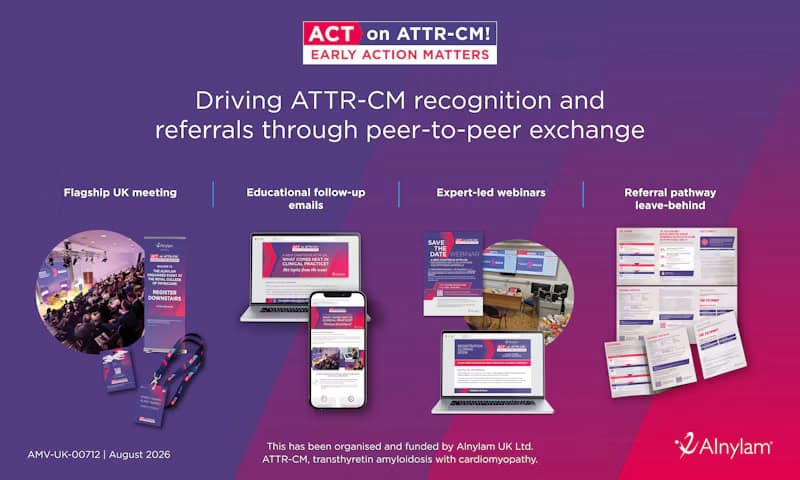
Transthyretin amyloidosis with cardiomyopathy (ATTR-CM) is an underdiagnosed, rapidly progressive disease in which delays to recognition and referral can result in irreversible cardiac damage. In a rapidly evolving UK landscape, Alnylam identified a need among cardiology healthcare professionals (HCPs) for practical education focused on recognising red flags and navigating the referral pathway. We partnered with the National Amyloidosis Centre to create “ACT on ATTR-CM”, a peer-to-peer educational platform with a bold visual identity and single-minded message: Early Action Matters. Through webinars, a flagship face-to-face meeting and practical resources, the programme connected HCPs with amyloidosis experts from across the UK. The programme was designed to facilitate learning through interaction, not presentation – encouraging discussion, collaboration and sharing of best practice. Within its first 6 months, the programme reached almost 400 HCPs and achieved consistently high ratings for quality and clinical relevance. It also contributed to an ~20% increase in referrals for TTR genetic testing (an essential part of the diagnostic journey) compared with the same period in 2025. Overall, these outcomes demonstrate how targeted peer-to-peer education can improve recognition and optimise referrals, helping patients access specialist care sooner.
Judges' comments
The entry from Alnylam Pharmaceuticals and Cognite Communications was grounded in clear, practical insights drawn from a broad range of stakeholders across different roles and levels of influence, providing a strong understanding of the challenge from multiple perspectives. The programme set ambitious aspirations around behaviour change and followed a logical sequence of connected activities that built engagement over time. It was encouraging to see strong customer reach, high levels of app engagement and early data being used to refine subsequent phases, alongside a notable increase in genetic testing that provides a tangible indicator of impact.